

- Directed by Lambert Hillyer
- Screenplay by Garrett Fort
- Starring Gloria Holden as Countess Marya Zaleska
Stylish and subversive, Dracula’s Daughter (1936) is the often-overlooked sequel to 1931’s Dracula and one of the rare Universal horror classics that deserves a modern remake. The story follows Countess Marya Zaleska (Gloria Holden), the reluctant daughter of the legendary Count Dracula, as she struggles against her insatiable nightly desire for women and blood. The plot is loosely based the 1872 novella, Carmilla by Joseph Sheridan Le Fanu, which predates Bram Stoker’s Dracula by 25 years and focuses on a fictional lesbian vampire. Yes, in 1935 Universal Pictures made a female-led, queer coded sequel to one of their most successful monster movies…and most of it works.
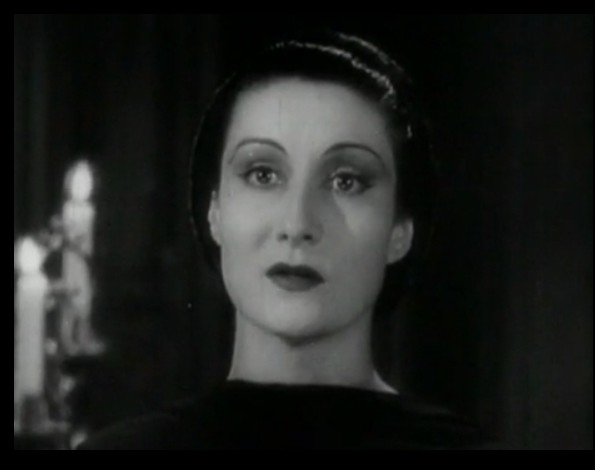
Dracula’s Daughter narratively begins moments after Dracula (1931) ends, but quickly diverges both thematically and stylistically under director Lambert Hillyer. In Dracula, Bela Lugosi’s iconic vampire takes a studied, masochistic pleasure in seducing his victims. Every scene plays with ideas of lust, desire, and submission, starting with Lugosi’s memorizing stare straight into the camera. He is always impeccably dressed and speaks with a confident eloquence that reeks of good breeding. He charms his way through every social interaction, whether leading Renfield through his decaying castle or dazzling Mina and Lucy at the theater. This calculated air of mannered affluence is the camouflage that allows Dracula to hide among his victims. Dracula’s Daughter explores similar themes of desire, classism, and submission, only now that it’s a women doing a preying, the monster changes from a charismatic count to a tortured lesbian.
In full transparency, the word ‘lesbian’ is never uttered in the film, only heavily implied. However, even in 1936 with the Hays Code in full effect, many audiences picked up on the overt clues that Countess Zaleska’s vampirism was a stand-in for homosexuality.
Hollywood Censorship – A Quick Primer on The Hays Code
The Hays Code refers to a set of so-called ‘morality guidelines’ adopted by the Hollywood studio system in 1930 to avoid potential government censorship by essentially pre-censoring themselves. Sex, profanity, nudity, childbirth, interracial relationships, glorifying crime, and other acts deemed ‘immoral’ were forbidden to sidestep any public claims of indecency.
While the Hays Code was voluntary for studios, the rules were mandatory for filmmakers if they wanted distribution in the United States. With directors banned from showing ‘crime in a positive light’ and homosexuality being illegal in 1936 America, there are no happy endings allowed for gay characters. In fact, characters exhibiting any queer-coded traits or actions had to end up dead, incarcerated, or a victim to some other form of punishment.
Luckily, the Hays Code was abandoned in 1968, which is why the mainstream shift to the drugs, sex, and violence in many iconic 1970s movies can feel both exciting and jarring for classic film fans.
Now back to our regularly scheduled movie review.
Countess Zaleska – Universal’s Queer Horror Queen
As mentioned earlier, Dracula’s Daughter opens just as 1931’s Dracula ends, with Van Helsing still in Carfax Abbey, just moments after driving a stake through Dracula’s heart. He confesses Dracula’s murder to the police and is promptly arrested. This creates the opportunity for for Countess Zeleska to steal her father’s corpse from Scotland Yard with the help of her familiar/manservant, Sandor, and destroy it with fire an elaborate funeral ritual. Once Dracula’s body is burnt to a crisp, Countess Zaleska believes she’ll finally get her one true wish – to stop being a vampire and return to a normal human life (complete with heterosexual impulses).
Unlike her famous father, Countess Zaleska does not enjoy being a vampire. She stares longingly into the middle distance and plays melancholy hymns at her piano. She pleads for mercy to unseen gods, spending night after night wishing she was different – a familiar form of self-loathing for many queer kids. Zaleska will do anything to convince herself that she can be like everyone else and “think normal things.” Like what they like, love who they love. But despite her earnest desire, Countess Zaleska is a vampire, and she prefers her meals on the female side.
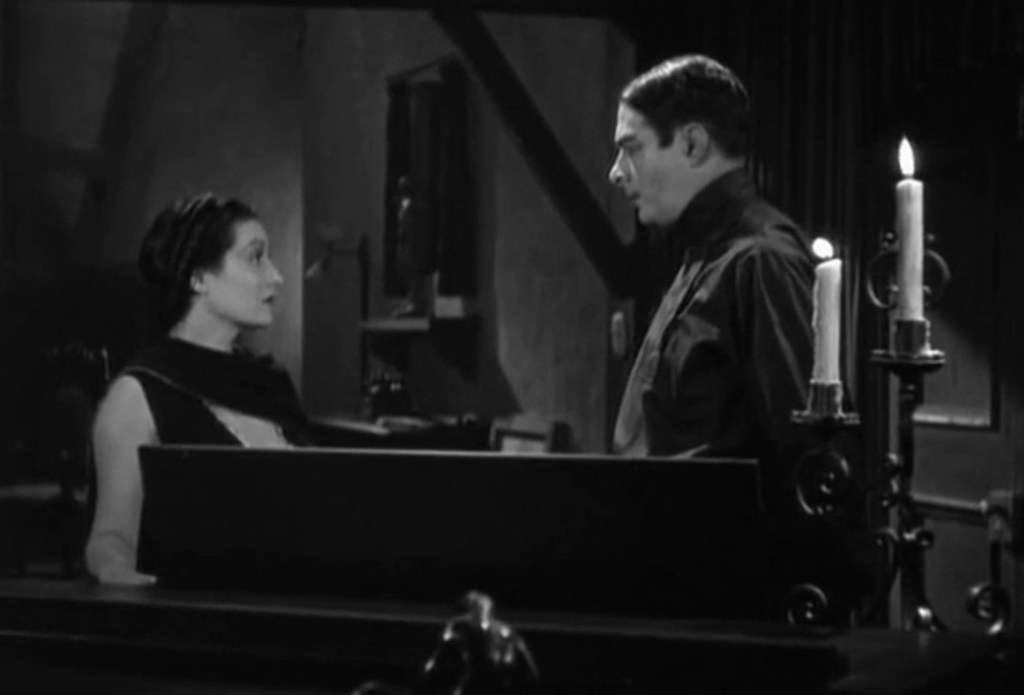
Movie monsters have always been metaphors, and Countess Zaleska’s very existence is an expression of common homophobic themes from that era. The idea of a blood-sucking night demon feeding on young, beautiful girls dovetails perfectly with pernicious ideas about lesbians as pariahs that ruin families by seducing innocent straight women.
Zaleska is always elegantly dressed in expensive dresses with simple lines and heavy cloaks. Her hair is dark and slicked back, her demeanor calm but somber. These stylistic choices alone visually separate the countess as an other from the more traditionally feminine women in the film with their flowers and ruffles. She constantly hides part of her face and hypnotizes her victims with an elaborate jeweled ring worn on her wedding finger. Zaleska’s inherent shame like a shadow over every scene.
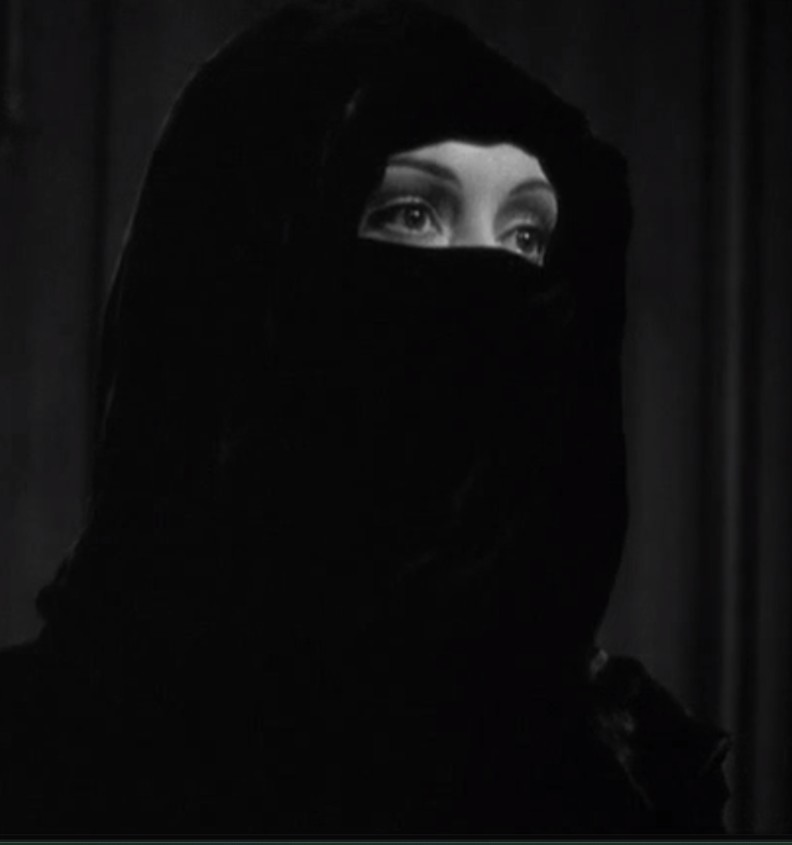
Seeking a Cure for Vampirism & Hysteria
When Dracula’s death does nothing to diminish her hunger, desperation sets in. Zaleska turns to renowned psychiatrist, Dr. Jeffrey Garth (Otto Kruger), as a potential path to heteronormative salvation. While this seems like a standard plot device, it is not a coincidence that Zaleska purposely chooses a medical-based remedy for her affliction.
Homosexual behavior was historically seen as a disease of the mind, much like popular ‘women-centric’ diagnoses like hysteria. A vampire seeking a scientific intervention to cure an ‘obsession’ mirrors how queer people have often either voluntarily or forcibly been put through traumatic medical and psychiatric treatments to repress their sexuality. If Zaleska could use her mind to conquer the darkness, she could stop her incessant desire to slip out into the night and seek out the company of young women. At least, that’s the theory.
*Spoiler Alert – You’ve Been Warned*
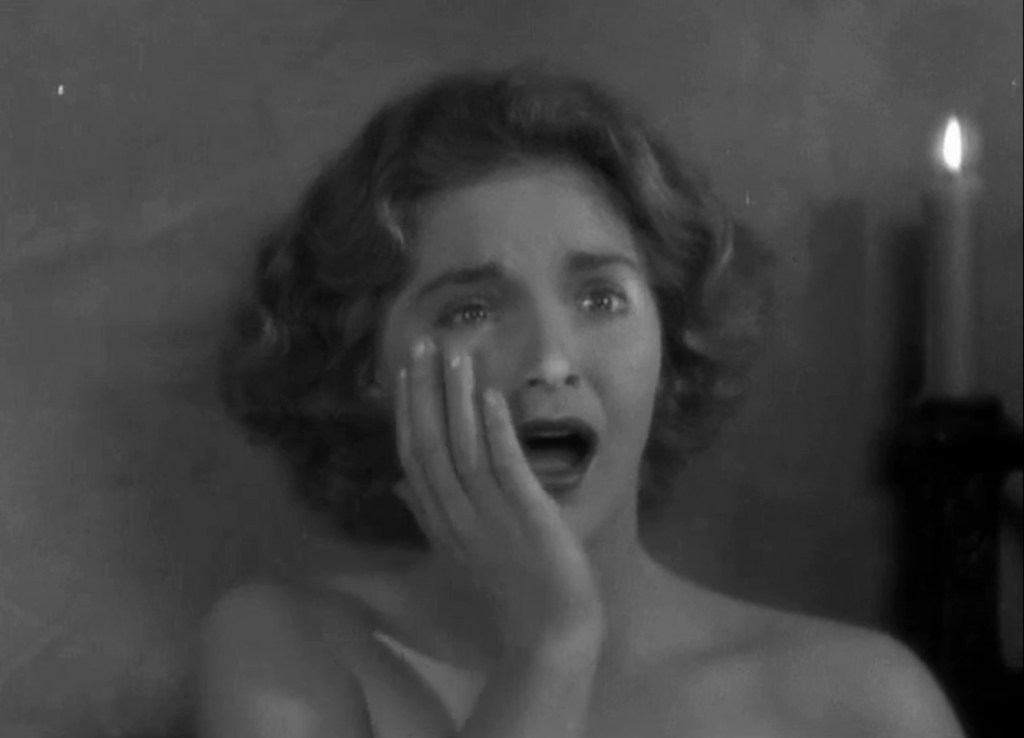
The most famous and provocative scene in the film takes place in Zaleska’s art studio as she fights against but eventually succumbs to her desire for female flesh.
After meeting with Dr. Garth, Zaleska decides to test her newfound willpower by sending Sandor out into the night to find a live model for a painting session. Sandor discovers a beautiful young woman named Lili near the river and persuades her to come back to the studio with promises of food, money and warmth for posing as an artist model. Zaleska seems calm enough at first as she instructs Lili to remove her blouse and stand near the fireplace. Lili still has her slip on, but the moment the she pulls those straps down, Zaleska’s entire demeanor changes.
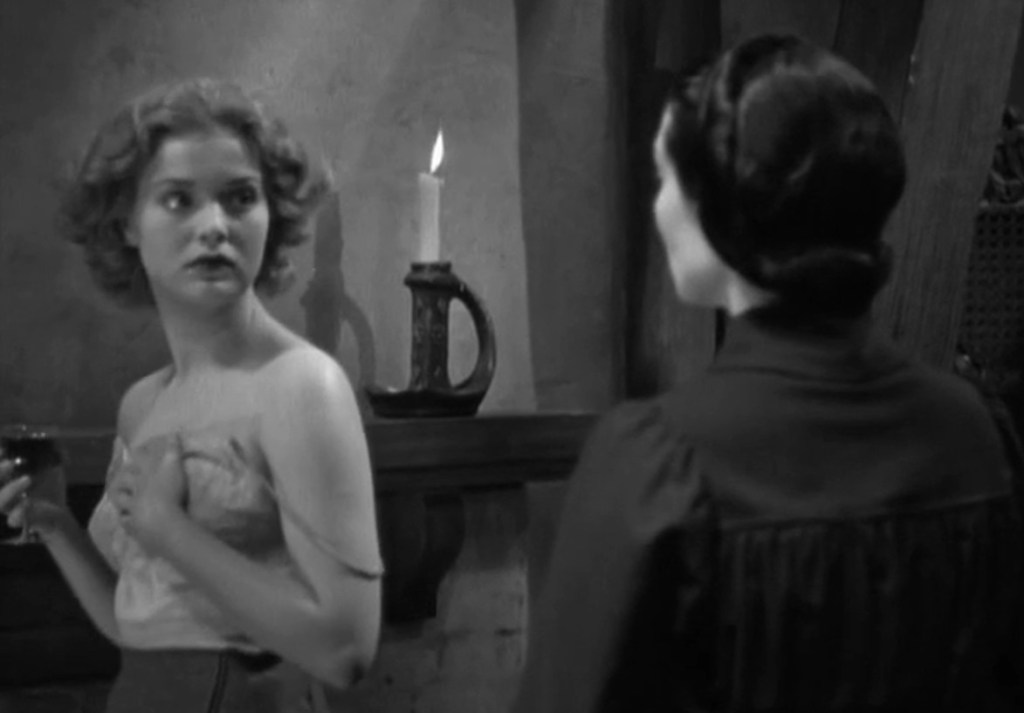
Suddenly the countess becomes her father’s daughter, a controlled and seductive predator. Zaleska raises her hypnosis ring, asking Lili if she likes jewelry as she begins moving closer. Even with the hypnosis taking effect, Lili is clearly scared and uncomfortable. She begins pleading to leave as Zaleska continues walking towards her. The film blurs and camera literally shifts to the ceiling then cuts to black as Lili screams offscreen.
Unfortunately, It’s All Downhill from Here
While there are a lot of bright moments in the film, the plot declines rapidly after this scene due to several narrative missteps. In addition to dealing with Hays Code restrictions, Dracula’s Daughter began filming before the script was completed due to a rights issue with MGM, and it shows in some of the pacing and transitions.
The promise delivered in the first half of the movie as the countess struggles with her guilt and seeks to cure her condition fizzles out in a sloppy third act. Zaleska’s previously clear motives are lost in a half-baked blackmail plot that moves the action from London to Transylvania. After realizing there’s no medical way to stop her vampiric longings, Countess Zaleska kidnaps Dr. Garth’s assistant/love interest Janet in order to force Dr. Garth to become Zaleska’s eternal vampire companion. If he doesn’t agree to stay with her, she’ll kill Janet. If you think this plot twist makes little to no sense, you would be absolutely correct.
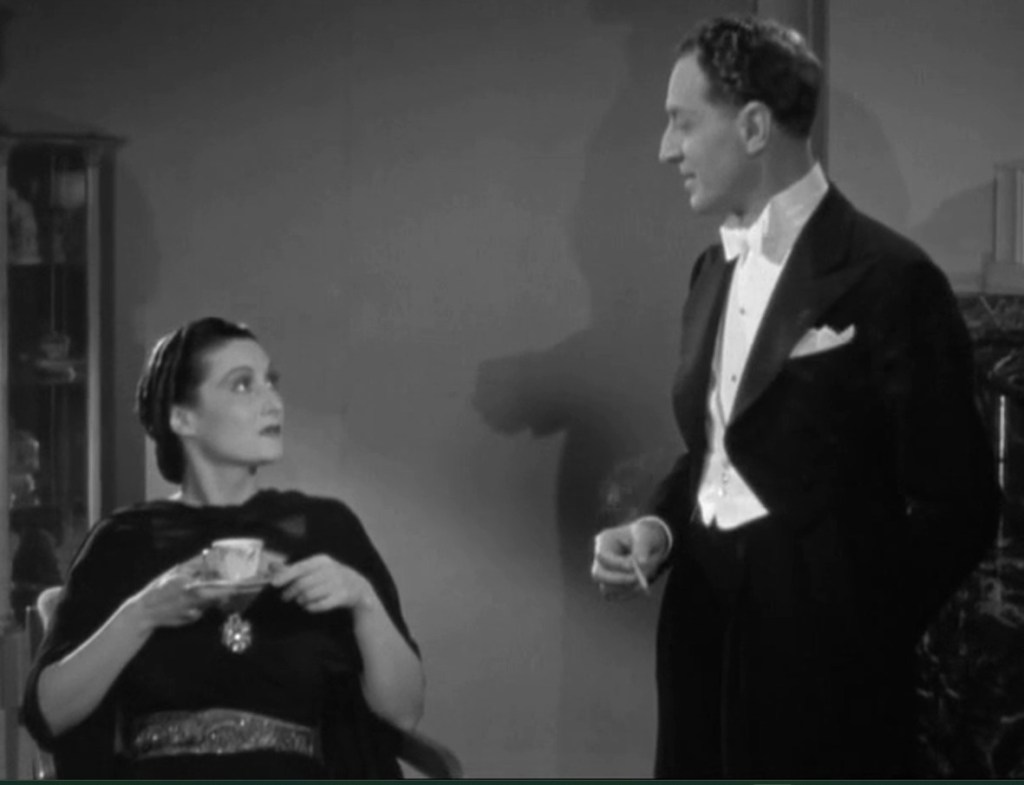
Why would Zaleska suddenly want Dr. Garth to join her as a vampire when her primary goal is to stop being a vampire? They have no real relationship other than 2 – 3 conversations about psychiatry and there’s no evidence her feelings are based on either love or attraction. Yet, she’s convinced she needs this particular man around her always, even telling him “You are the one person that stands between me and utter destruction” and “I need you to save my soul.” The scenario only begins to make sense if you believe that since Zaleska has accepted her vampiric fate, the only thing Dr. Garth could hypothetically ‘save’ her from is being a lesbian.
Ironically, the film ends up reaffirming that just like being a vampire, being gay isn’t something you can pray or medicate away, it’s just who you are.
The Last Temptation of Countess Zaleska
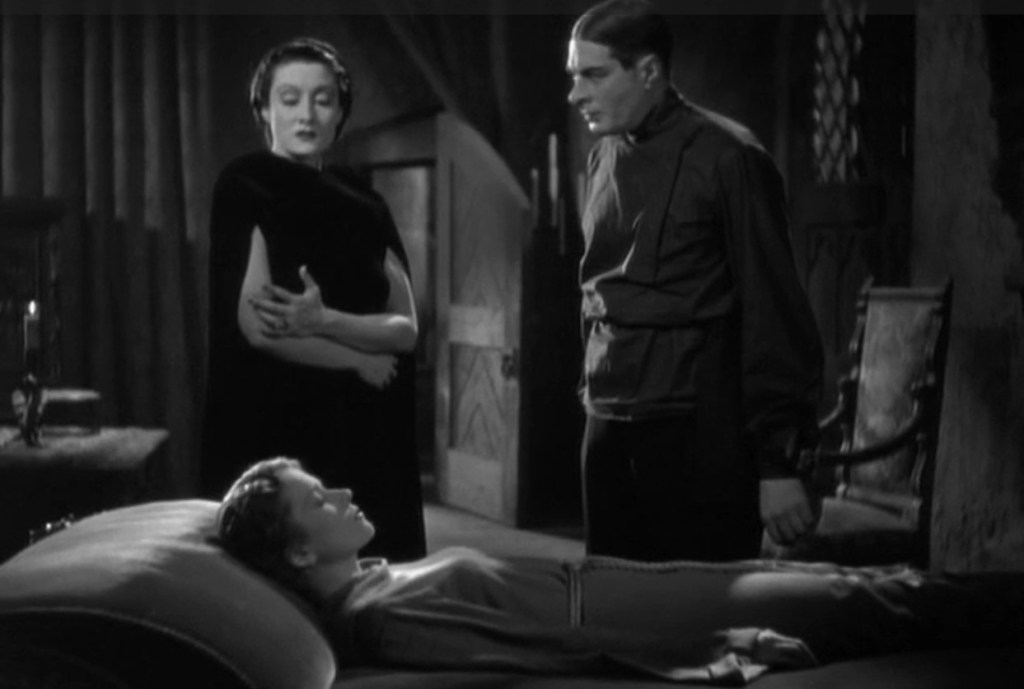
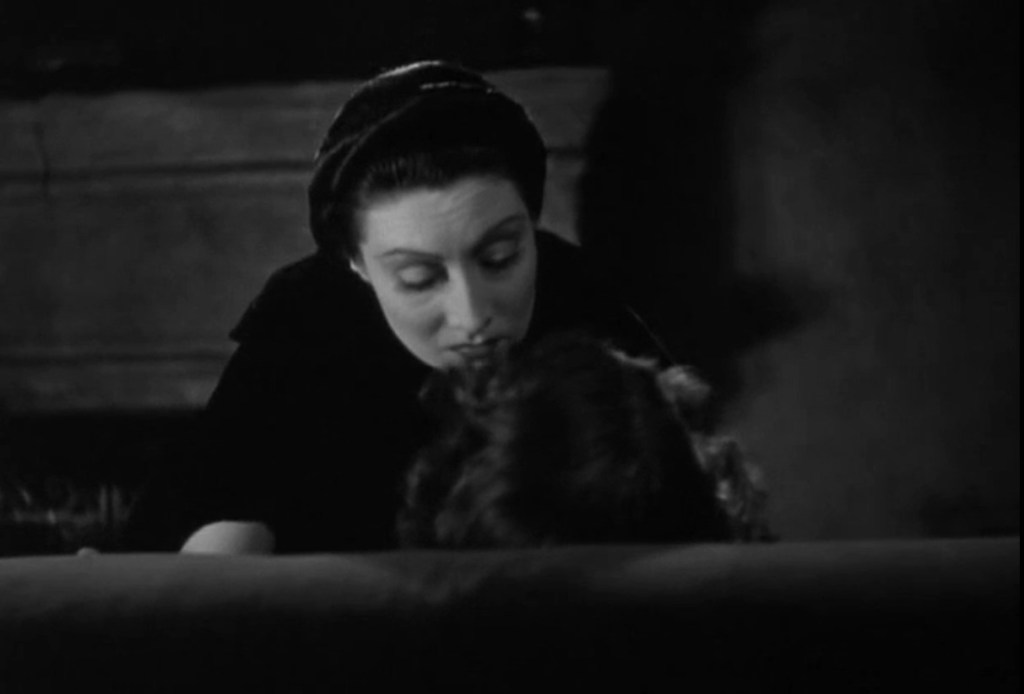
Now back in Transylvania with Janet’s unconscious body, Zaleska finds herself once again overcome with desire. Even as the countess tells Sandor her vampire plans for Dr. Garth, her eyes cannot leave Janet. She doesn’t even blink. When Sandor says, ‘You won’t wait long” before exiting the room, he’s right. The bedroom door is barely shut before Zaleska moves onto the bed and lingers over Janet’s sleeping face. The scene is coyishly framed so you can only see Zaleska’s face moving downwards and the back of Janet’s head. The result ends up looking more like a couple about to kiss vs an actual vampire attack. Of course, Dr. Garth bursts into the room just in time to stop the action and save Janet from Zaleska (or vice versa).
This misguided kidnapping/blackmail plot comes to a close when Zaleska’s trusty manservant Sandor murders her (with an arrow of all things) for gall of attempting to transform Dr. Garth into a vampire instead of him. Sandor grabs another arrow to kill Dr. Garth, but is shot in the process by a policeman.
Other than the bad guys dying at the end, there’s no real resolution for the main characters. The closest you get is Dr. Garth and Janet conveniently realizing that they love each other and are now safe to enjoy a traditional, no-homo life back in London.
Is there a future for Dracula’s Daughter?
Even with the rushed and confusing ending, there’s more than enough good ideas in Dracula’s Daughter to warrant a nuanced remake. One that explores the moral quandaries of being a reluctant vampire without being buried in villainized queer trauma. Imagine what a cerebral director like Jennifer Kent (The Babadook) or Mary Haron (American Psycho) could do with Zaleska’s spiraling cycles of guilt and seduction. Or how highly-visual directors like Coralie Fargeat (The Substance) and Nia DaCosta (Candyman 2021) could explore repressed female desire though the lens of body horror.
There have been multiple compelling, character-driven vampire films released over the last two decades, from Let The Right One In (2008) to Ana Lily Amirpour’s A Girl Walks Home Alone at Night (2014). But when it comes to lesbian vampire films, we’re still mostly relegated to campy, cleavage-heavy Hammer movies from the 70s (which are fun, but for different reasons) and stylish cult classics like The Hunger (1983), which focus more on style than plot.
I think queer movie fans deserve better and I’d love to see what a talented screenwriter and director could do by remaking Dracula’s Daughter for a modern audience.

 Allison Goldstein