Wrap it Up: 2025 Reflections

It’s getting down to the wire for end-of-year reflections, and while I am eager as anyone to say goodbye to 2025, it was also a year full of goodness worth celebrating. I had several poems and non-fiction pieces published this year in Saw Palm, Horror Homeroom and Last Girls Club, and got to participate in several poetry readings, including Hollie Hardy’s amazing Saturday Night Special. It’s been years since I performed poetry in front of a live audience, and it was wonderful to be part of a community experience again and restore some of those lost connections.

This year also marked the release of my first poetry chapbook, In The Night, In The Dark (available now from Bottlecap Press), and it still feels surreal knowing I have an actual book out in the world. Like all projects, there is a genuine feeling of accomplishment that comes from seeing something through from ideation to reality. And while publication isn’t the end-all of existence, it was a personal goal to publish a book and I’m just really proud of myself. Full stop. My therapist is somewhere smiling.  

In The Night, In The Dark Poems by Allison Goldstein - Book Cover
Cover Art for Allison Goldstein’s New Poetry Chapbook, In The Night, In The Dark (Available Now from Bottlecap Press)

I also love that my first book is about horror movies. After I finished my MFA in poetry way back in 2006, I really got in my head about what serious poetry books were supposed to be. Of course, I didn’t really write that way and I knew it didn’t matter, but it still did. And I found myself rejecting ideas as too niche or too genre, even when they felt the most authentic to who I am.

And then during the long foggy years of COVID, I realized maybe I should try writing about something I really like instead of what I thought I was supposed to write about. So I wrote a book about something I really like – 20th century horror movies. It’s filled with the scenes, characters, and films that haunt my dreams in the best possible way. And I hope everyone likes it and/or connects with it in some way, but if they don’t that’s ok too.

There is beauty in making and beauty in sharing that is itself always enough. Art is a gesture.

I also got to celebrate the success of several friends this past year, including new books from award-winning writers and equally great people Amanda Chiado (her chapbook of wild, fun, and surreal pop culture prose poems, Prime Cuts is available from Bottlecap Press) and Heidi Kasa (who published her first length poetry book The Bullet Takes Forever and an award-winning flash fiction chapbook, The Beginners in the same year, epic).

I wanted to make 2025 a year of saying Yes as much as possible. Yes, to new opportunities and experiences and people. And I think I got there. Looking forward to even more adventures on the off the page in 2026. I have two other chapbook manuscripts out at contests right now, so who knows what the new year will bring. Thanks for joining me on this journey.

Happy Holidays. Wishing for a Better, More Peaceful World in 2026.

Jane Austen’s 250th Birthday

Today is Jane Austen’s 250th birthday, and I find myself rereading Pride & Prejudice with the same cheerful delight that greets me each time. Her writing style is just so friendly and inviting, like meeting up for coffee with an old friend. I also greatly admire her pacing and how she can dig into the meat of each scene without veering into laborious overdetail. As a poet, I can’t help but love the play of sound she utilizes and how certain words dance on the tongue; but her language is never flowery or pretentious, and doesn’t take itself too seriously.

Beyond her prowess from a technical standpoint, Jane Austen also has the notable distinction of creating compelling characters, who when confronted with their own real and significant flaws, decide to put the work in and fix themselves instead of relying on a romantic partner to do it for them. It’s a Christmas miracle.

Austen’s cleverness is both mind-blowing and ageless across cultures, countries, and centuries. Her literary takedowns still land like drag queen reads 200 years after the fact. And on top of all that, she’s just so funny. The first time I read Jane Austen I was floored by the fact that I was laughing, like really laughing loudly out loud at some of her character eviscerations.

At the most basic level, Jane Austen does a magnificent job of showing us exactly who her characters are, how they grow, and why. This is why the British army handed out Jane Austen books to soldiers during wartime. This is why modern audiences still return to these stories year after year. And why there will always be a new thread on Reddit every week about whether the 1995 BBC mini-series or the 2005 Joe Wright film is the best adaptation (I’m a 2005 girl – excellent boiled potatoes forever), and why we’ll get a dozen new remakes in the years to come. So cheers to Jane Austen, the patron saint of witty women writers, on her 250th birthday.

In continuation of celebrating incredible women writers you should know, please allow me to introduce you to my dear friend and award-winning writer, Heidi Kasa, who has not one but two incredible books that were just released this fall (and make wonderful holiday gifts): her poignant debut poetry collection, The Bullet Takes Forever (Mouthfeel Press), and The Beginners (a flash fiction collection), which won the The 2023 Digging Press Chapbook Competition. The Bullet Takes Forever is a powerful look at gun violence in America, from its inescapable cultural imprint to its devasting impact on a deeply personal level. It’s brave and direct and heartbreaking and energizing. Everyone in America should read this poetry book, and I can’t recommend it enough. Be sure to check out Heidi’s website to learn more about her writing and upcoming reading events: http://www.heidikasa.com.

Heidi’s Books

You can buy The Bullet Takes Forever, by Heidi Kasa from Mouthfeel Press: https://www.mouthfeelbooks.com/product/the-bullet-takes-forever-by-heidi-kasa/78

To buy The Beginners chapbook from Digging Press, visit: https://digging-press.myshopify.com/products/the-beginners-by-heidi-kasa-pre-order

An Ode to Margaret White’s Orgasm Death Rattle

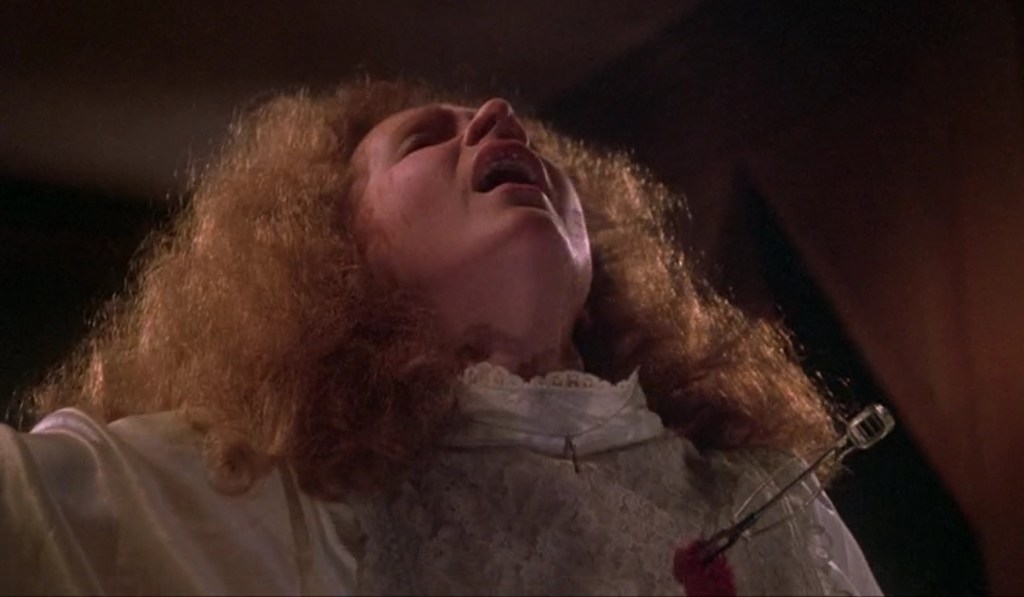
Piper Laurie as Margaret White in Brian De Palma’s 1976 adaptation of Carrie, released by United Artists

Margaret White is a horror icon in life and in death. While several extremely talented actresses have taken on the role of Carrie White’s fanatical mother, no performance has reached the charismatic yet unhinged fever dream of Piper Laurie in Brian De Palma’s 1976 adaptation of Carrie. Laurie’s ability to capture the both the zealotry and otherworldly oddness of Margaret White remains a beacon for horror fans and an enduring pop culture reference nearly 50 years after the movie’s original release.

Pre-production, Piper Laurie famously believed Carrie was a ‘lyrical black comedy’ and not an actual horror film. She couldn’t comprehend that this deranged woman who shouted about her daughter’s “dirty pillows” could be anything but satire. Even if initially misguided, I think this perspective ended up freeing Laurie to explore the frenetic darkness of Margaret White without a need to ground the character in realism—consequently creating a silver screen portrayal that defied genre.

Laurie earned her a second Oscar nomination for transforming Margaret White into a fully-conceived villain that is gleefully over-the-top yet entirely believable. With an untamable mane of hair, dramatic cape, and a sing-songy voice that vacillates between vulnerable and manipulative, her very presence vibrates off the screen with a confidence that seems even more gauche next to Carrie’s overwhelming shyness.

From the moment we see her proselytizing to the neighbors, we know exactly who Margaret White is, and how her religious fervor shapes the way she both perceives and abuses her daughter. Her dogmatism acting as both a mask and a projection of her inner turmoil.

It’s easy write off that kind of character as just another blind Christian fanatic, but Piper Laurie as Margaret White radiates such an intensely felt sense of self that it permeates her religious zealotry. There is an argument to be made that Margaret White is the actual God she claims to worship under another name. Her staunch refusal to engage with reality combined with an unyielding need for control makes Margaret feel more like the leader of her own one-woman cult vs. a humble servant of her professed faith.

**Spoiler Alert**

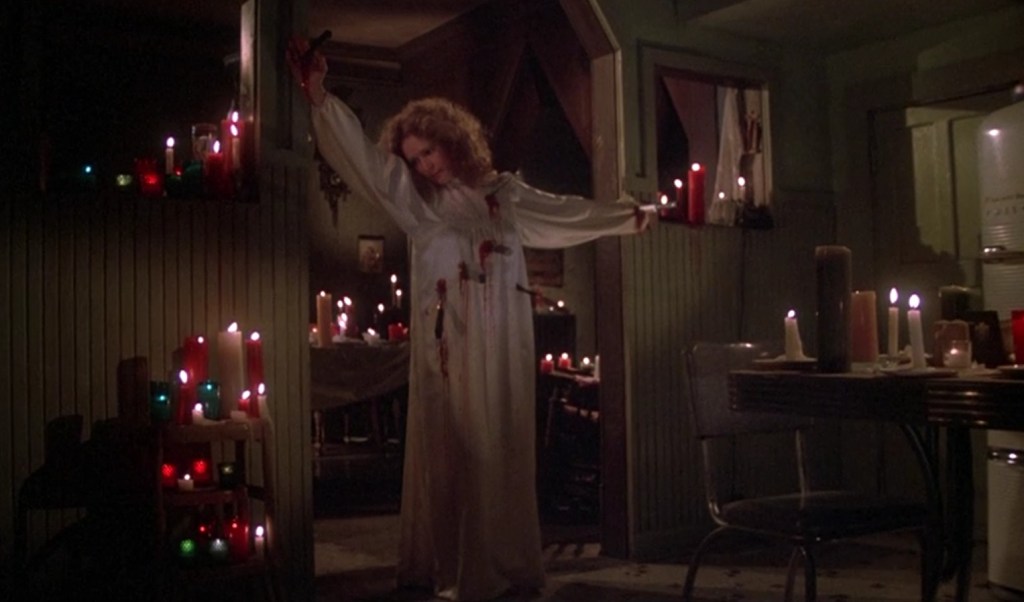
The culmination of this devotion is realized in Margaret White’s epic death scene. After literally stabbing her daughter in the back, Margaret is given a cinematic end befitting her grotesquely repressed character—being crucified with kitchen utensils (in the style of her beloved St. Sebastian statue) as Carrie burns the house down around them.

When it hurts so good

Side note: Transforming domestic cooking tools associated with nourishment and nurturing into weapons against a negligent mother feels very on point for mid-twentieth century horror.

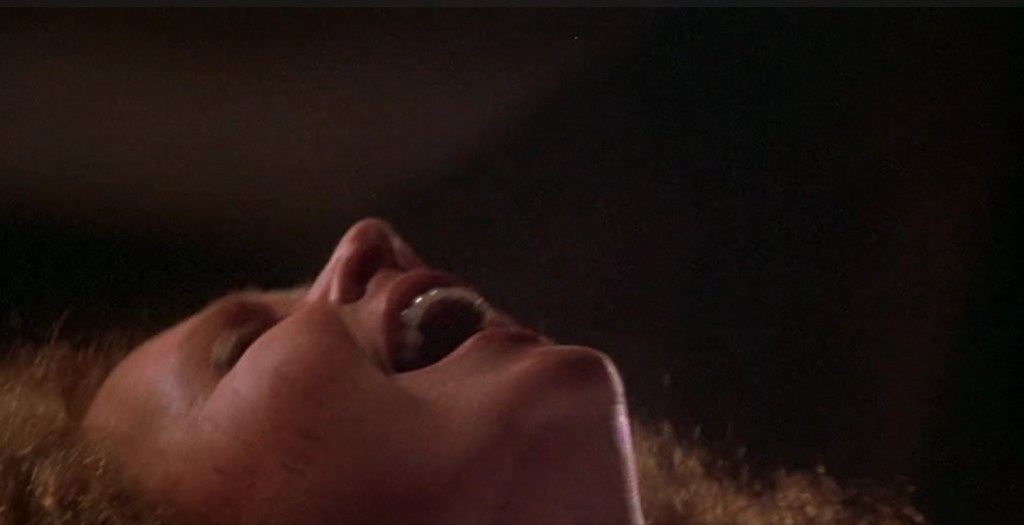
Once the knives and forks go in, Margaret’s wild moaning starts, then her head begins to loll back and forth; opening and closing her eyes as her grunts waver between anguish and ecstasy. And they don’t stop—the euphoric groans only growing deeper and more exhaustive with each breath as Carrie quivers in the corner.

From the penetration of the first flying knife to the moment Margaret’s head finally rolls down onto her shoulder, her orgasmic death rattle lasts not five seconds, not 10, not even 30 seconds, but a nearly incomprehensible 58 seconds. That’s basically a full minute of orgasmic wails and swelling music and Margaret White tossing her head back and forth in sublime ecstasy.

Margaret White thoroughly enjoying her kitchen crucifixion

She doesn’t seem scared or confused or even in significant pain during her crucifixion, to the point where some of the moans almost sound like laughter. And while a minute may not seem like an eternity outside of the movies, in a 98-minute film, Margaret White’s death orgasm is nearly 1% of Carrie’s total runtime. 

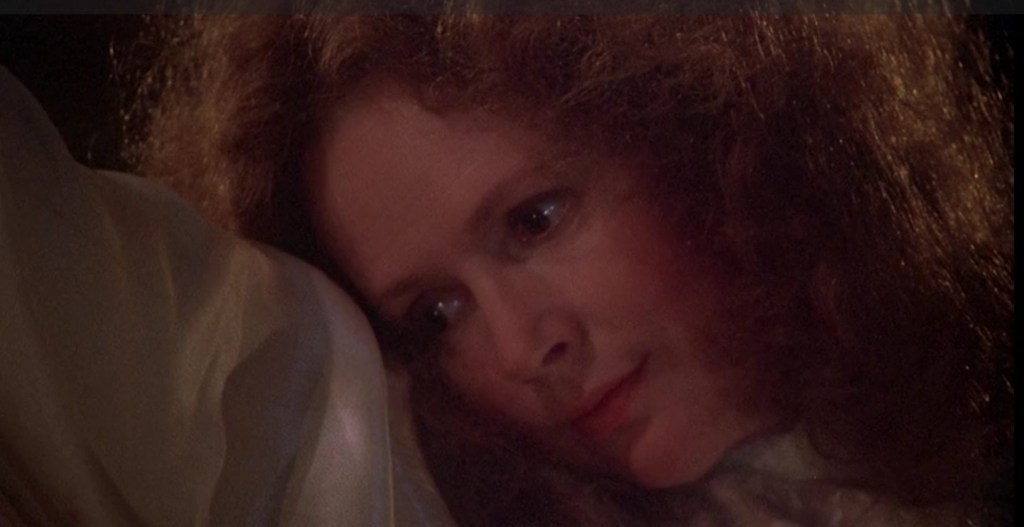
And she dies with a smile

At the end of Carrie, Margaret White is absolutely ready to die, but not before letting out the window shattering, eye-crossing, time-warping orgasm she’s been holding in her entire adult life. This is what happens after decades of pent up, shamed-fueled celibacy. Being crucified by her telekinetic daughter may not have been the way Margaret White envisioned meeting her end, but in Piper Laurie’s hands, she’s more than happy to go out with a smile on her face after the best orgasm of her life. So, who really gets the last laugh?

The end of Margaret White

Allison Goldstein Author Spotlight is Live on BarBar

I can’t even pretend to be less excited about this, so I won’t even try. I was honored to have my poem, “Carnival of Souls – Muted” featured in BarBar’s Simulacra Anthology (available on Amazon), in December 2024. When I reached out to let them know that poem will also be included in my new chapbook, they very generously offered to include me in their Author Spotlight series and that feature is now live on the BeBarBar website.

The interview explores how the project came together as well as my writing process and some of the unexpected surprises that come with writing and publishing poetry. I am very grateful to everyone at BarBar for this opportunity and hope you enjoy the interview.

If you haven’t picked up your copy of “In The Night, In The Dark” yet, head on over to Bottlecap Press and get your hands on a copy today. It’s the perfect addition to your Spooky Season reading.

Stay spooky friends!

Survival Theory

They say it’s like an earthquake –

The chaos so sudden
time begins to unravel.

light and then no light

Rain thick as blood
coating what’s left of the window.

River of broken glass
stealing what’s left of the moon.

Poem by Allison Goldstein (2024)

This is one of the poems that came from writing my horror collection, but didn’t make it into the final book. I wrote three of these poems (that I still really like), including “If You Want to Live” as writing exercises to get into the themes and tropes of horror films.

For a while I called these extra poems ‘appendixes’ and even tried them as chapter intros; but alas, they just needed to find a new home. Since the poems explore larger themes in horror vs. commenting on individual films, they didn’t seem to quite fit in with the chapbook, but I love them anyway for the spooky little poems they are. Perhaps they’ll be part of a larger, different collection eventually.

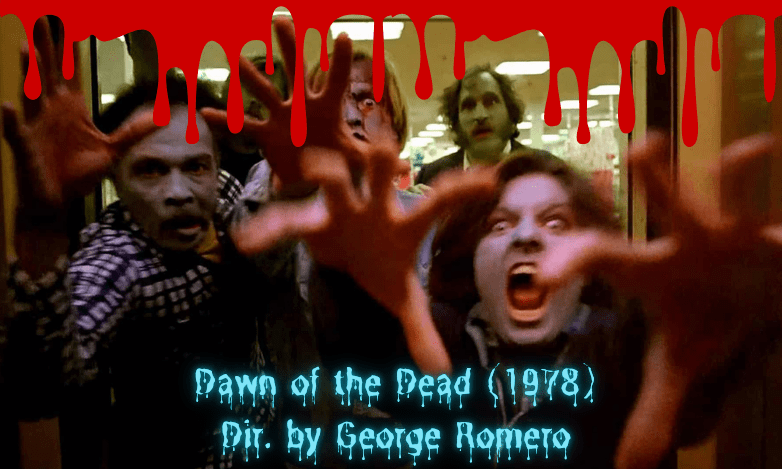
Dawn of the Dead

Dawn of the Dead

and when we’re dead

we’ll all go to the mall

Poem by Allison Goldstein

From the book “In The Night, In The Dark” by Bottlecap Press (2025).

I love this weird little poem. It’s actually one of the first poems I wrote for the collection and probably the shortest poem I’ve ever published. “Dawn of the Dead” originally appeared in Molecule – a tiny lit mag in Fall 2022 and I love that it found a home that appreciated both its humor and brevity.

One of the things I adore about horror as a genre is it’s ability to interject comedy and camp with serious messages about fear, society, and human nature. Romero’s 1978 classic “Dawn of the Dead” is a masterclass in this area, dazzling audiences with the perfect combination of gory practical effects (due to the genius of Tom Savini), campy yet creepy zombies, and a still-relevant message about the dangers of over-consumerism, and its physical, emotional, and psychological effects on society.

Romero has always been a pro at understanding how to create a solid plot that makes sense on its own but leaves a lot of space for wider thematic interpretations. Is it a coincidence all the zombies descend on the mall? Absolutely not. Mall culture in the U.S. was already booming in the late 70s (and would only grow exponentially through the 80s and 90s). This era ushered in a major cultural shift, eschewing the importance of community for rampant greed and consumerism. Society encouraged people to make as much money as possible and spend it all on themselves to help drive corporate profits. As a result, American social culture became inexplicitly intertwined with shopping and consumerism.

It’s also not a coincidence that themes of unrestrained consumerism easily mirror the concept of mindless zombie hoards solely driven by a innate desire to consume. They come to the mall out of habit, but also as a symbol of what unfettered consumerism will ultimately cost – humanity itself. It’s terribly smart and awfully funny and one of the best zombie films of all time. I only hope my small poem does it a hint of justice.

Allison Goldstein’s Poetry Chapbook – In The Night, In The Dark is Available Now!

In The Night, In The Dark Poems by Allison Goldstein - Book Cover

I’ve waited for this day for years and I can’t believe it’s finally here. My first poetry chapbook, In The Night, In The Dark, is live and available from Bottlecap Press!

A haunting ode to Universal Monsters, 80s slashers, and Final Girls, In The Night, In The Dark is a razor-sharp collection of ekphrastic poems inspired by classic 20th century horror films. From The Bride of Frankenstein’s first hiss to Pamela Voorhees searching for her son’s lost heart, each poem explores the cinematic chasm between dread and desire.

Dark, witty and unsettling, the poems reimagine horror films not as passive nightmares, but emotional reckonings, including “Dracula,” “Creature from the Black Lagoon,” “Night of the Living Dead”, and “Suspiria”. Allison Goldstein’s deftly crafted collection meditates on the transformational impact of our collective terror – both on and off the screen.

Are you ready to step back into the dark and confront what haunts you?

It’s always Halloween in here. Buy In The Night, In The Dark today from Bottlecap Press!

*Support indie authors and small press publications*

If You Want to Live

Never go upstairs
or down to the cellar.

Don’t take your clothes off
or investigate the strange noise
at the end of the hall.

Don’t count on the phone working
(any phone)
or the car in the driveway.

Never go to sleep,
even if you make it to sunrise.

Never feel safe,
even with a knife in his chest.

He’s not dead,
just waiting.

Poem by Allison Goldstein

I love horror movies. Is that obvious? I also love writing poems about horror movies, including “If You Want to Live”, which offers some pertinent advice to anyone who happens to find themselves trapped in a horror film. This is definitely a condensed list, so what would you tell someone to help them try to survive a horror movie?

Spooky Summer is Here! I’m Featured in the New Issue of Last Girls Club

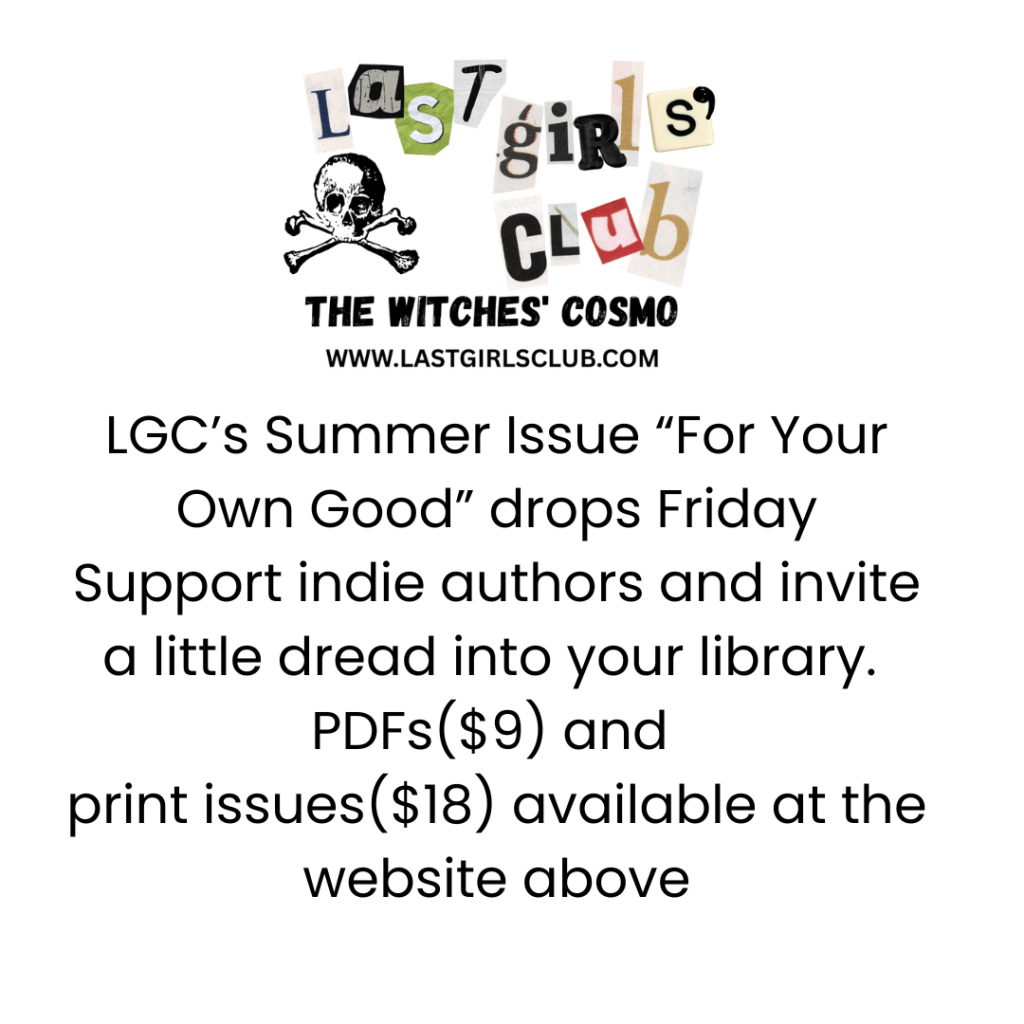
I’m so excited about this one! One of my horror movie poems, ‘Phantom of the Opera’ is featured in the newly released Summer ’25 issue of Last Girls Club. Available in Softcover or PDF, the issue’s theme is ‘For Your Own Good’, so you know you’re in store for some creepy tales and poems sure to send a shiver down your spine. Order your copy today and get your summer spooky on while supporting small indie publishing and feminist horror.

High Camp Revisited: Check Out My ‘Wild Zero’ Review on Homeroom Horror

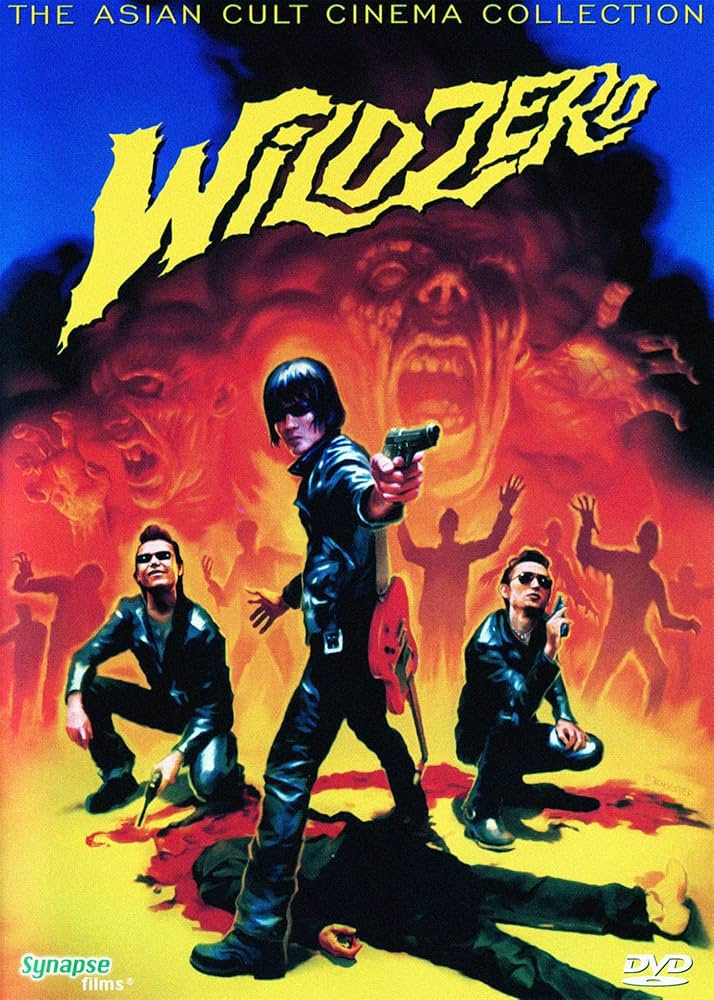
Wild Zero (1999) DVD Cover

I love horror movies. I know this isn’t exactly news, but it’s both true and timely as I am delighted to announce that my new 25th anniversary review of ‘Wild Zero‘ (1999) is now up and ready to read on the Horror Homeroom website!

For those of you unfamiliar, Wild Zero is a wonderfully campy, Rock ‘n’ Roll horror-comedy starring the iconic Japanese punk band, Guitar Wolf. It’s got everything – zombies with exploding heads, CGI alien space ships, a killer soundtrack, and a unexpectedly sweet trans love storyline. I love this movie and I’m honestly sad it never gets mentioned in the pantheon of great zombie flicks, so I’m on a mission to spread the good word. Check out my article on Horror Homeroom and then go stream this overlooked 90s zombie classic today!

Are you already a Wild Zero superfan? Let’s talk about it! Share your thoughts in the comments below.