I’m so excited about this one! One of my horror movie poems, ‘Phantom of the Opera’ is featured in the newly released Summer ’25 issue of Last Girls Club. Available in Softcover or PDF, the issue’s theme is ‘For Your Own Good’, so you know you’re in store for some creepy tales and poems sure to send a shiver down your spine. Order your copy today and get your summer spooky on while supporting small indie publishing and feminist horror.
I’m delighted to announce that my poem, ‘The Night Heron’ is featured in issue 19 of Saw Palm: Florida Art & Literature. The theme of the issue is ‘Florida Strange’ and I’m thrilled to be included alongside so many wondrously weird works about my home state.
Update: The new issue is live and you can purchase it from the Saw Palm website.
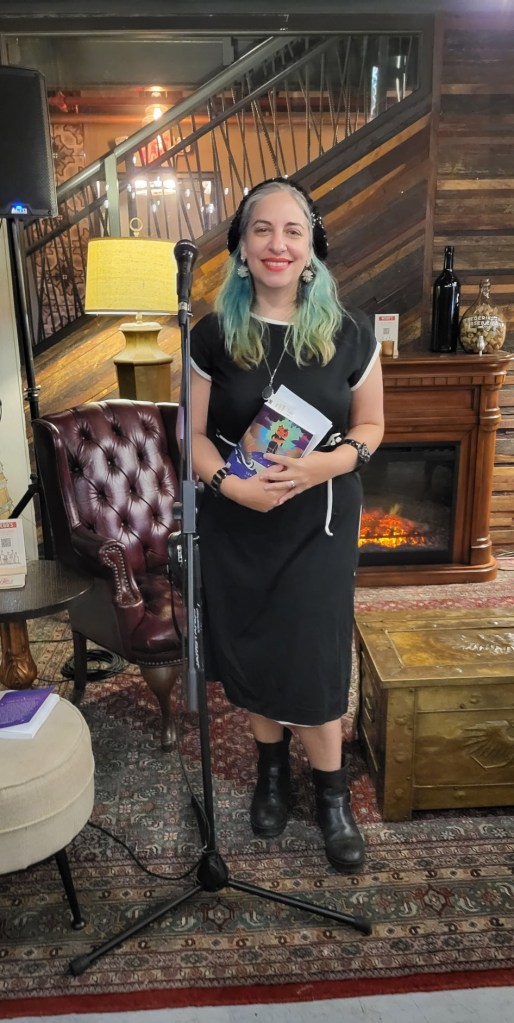
On May 7th, the magazine held a release launch party at Green Bench Brewing Company in St. Petersburg, so Kaleb and I decided to go on a poetry road trip. The reading itself was really fun and had a great turnout. It’s the first time I’ve performed poetry live in years, so I was a bit anxious about getting back on stage. Once the reading actually began however, that quickly passed. I had almost forgotten how inspiring it is to be in a room with a bunch of artists sharing their work. The energy was uplifting, and by the time I got up to read, I was hardly nervous at all (but definitely still kinda nervous).
Allison Goldstein (it’s me) at the Saw Palm issue 19 release party on May 7th at Green Bench Brewing Co.
I want to congratulate not only the writers and artists featured in the issue, but all the editors and staff at who put the magazine and the release party together. I hope everyone gets the chance to check out issue 19 once it goes live and I’ll update this post with that link as soon as it’s available. Stay strange and keep writing.
I am poet and not a math person. That’s not to say it’s an inherent flaw with all poets. Most people in general are better at numbers than I am, which I guess is one of the reasons I find them so intriguing. As a concept, complex math exists so far outside my realm of understanding that I can only gaze upon it in awe and remain thankful there are people who can conceive of such wonders.
Poets often have to consider numbers one way or another when addressing form. There’s the 14-line sonnet, the 10 syllables in a line of iambic pentameter, or actual Equation Poetry that invites mathematical symbols and formulas into conversation with a poet’s words. The musicality of phrasing, rhyming structures, meter – math is an essential component of formal poetry. And like all restrictions, creates both structural limits and creative opportunity.
One of the most exciting forms of mathematic poetry are Fibonacci poems. These poems take their structure directly from the Fibonacci Sequence – a numerical series where each new number is the sum of the two numbers that precede it, for example:
0, 1, 1, 2, 3, 5, 8, 13, 21, 34, 55, 89…
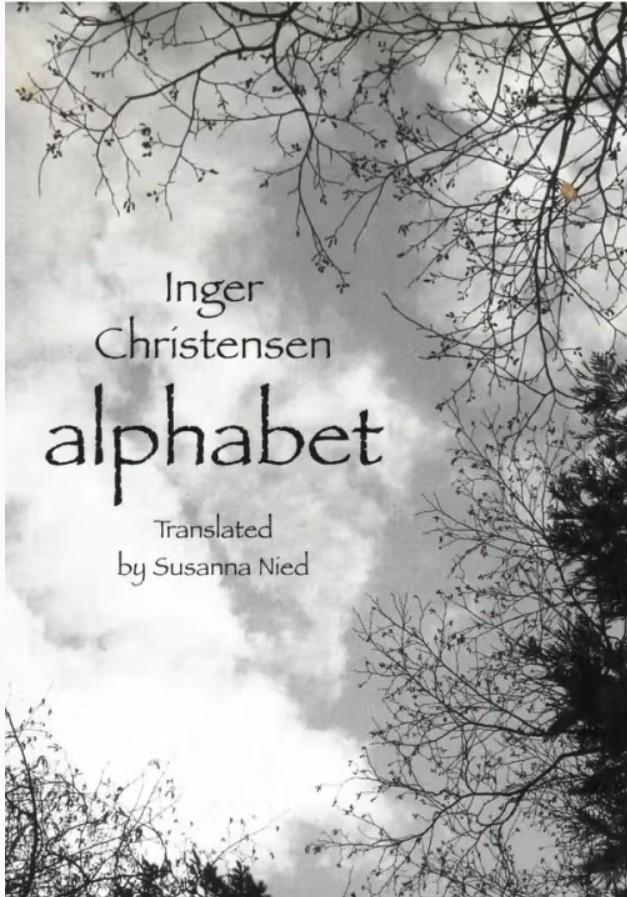
My all-time favorite Fibonacci poem is the famous book “alphabet” by Inger Christensen (translated from Danish by Susanna Nied). It’s a beautifully conceived book-length poem that is both Abecedarian (each line begins with the next letter of the alphabet in sequential order – A, B, C, D, etc.), AND written in 14 sections with each section’s line length dictated by the corresponding number from the Fibonacci sequence. For example: Section 1 of the poem, “A”, has only one line, while the last section of the poem, “N”, has a total of 610 lines.
‘alphabet’ by Inger Christensen, Translated by Susanna Nied (New Directions, 2000)
The poem builds organically, starting with the simple image of an apricot tree – “apricot trees exist, apricot trees exist.” The first few sections of the poem embrace this cadence of repetition and alliteration, naming even more everyday things that exist from blackberries and citrus trees to hydrogen. As each section doubles in line length from the one before it, the poem takes on a natural tension, growing grander in scope both physically and thematically. Suddenly along with ‘early fall’ and ‘elk’, we start to see more abstract ideas like ‘afterthought’ and ‘memory’s light’. These ethereal observations take a more sinister turn by section 7 where “guns and wailing women, full as greedy owls exist…”.
The poem continues to build a world that erupts out of itself, weaving the reader through a complex and mesmerizing tapestry of natural elements and the complexities of the human experience – love, fear, war, death, destruction. And we as the readers are not removed from the equation. We are part of the things that exist and act as a witness to what exists – the beauty and the horror alike.
It’s a wildly successful example of a mathematical form not only supporting the poem visually and musically but reinforcing the very structure of the narrative. The stakes get higher as the lines get longer. The ideas go from granular to metaphysical, starting from that simple image of the apricot tree. It’s complex without being inaccessible and a joy to revisit – even as the darker themes spread their fingers throughout the verse.
My Take on a Fibonacci Poem
When I first read alphabet in the early 2000s, I was inspired to write my own silly version of a Fibonacci Poem by focusing on another anachronistic device – the answering machine. A very long time ago I had an apartment in Oakland with my boyfriend (now husband) Kaleb and our friend Aaron. It had a landline and an answering machine.
Shortly after moving in, we started getting messages for a guy named Jeff, and those messages told the story of a messy breakup between Jeff and Linda. These people were looking for answers they were never going to get – at least not from us. They also never seemed to call while anyone was home. The three of us didn’t know how else to handle the situation, so we changed our answering machine’s outgoing message to break the bad news to all the Jeff and Linda fans. That message inspired the following poem:
The Problem of Answering Machines (a Fibonacci poem and imperfect response)
… no, we are not here right now to accept your call, but appreciate your attempt at communication, well aware that this may not be enough time to record your intentions, but by reducing our connection to your name, number, and brief outlining of your purpose for contact, citing specific examples of why this conversation may at all prove pertinent to our overall wellbeing will be useful in deciding whether or not to return said call in any timely fashion as it relates to what time if any we have in the future to commit—
<beep>
Jeff and Linda do not live at this machine, they have told us to say that they will not be returning your call; they have no new number
and no, he does not love her anymore.
– Allison Goldstein, 2005
The first section of the poem mimics an overly long outgoing answering machine message and follows the Fibonacci Sequence with 0, 1, 1, 2, 3, 5, 8, 13, 21, 34, 55 syllables-per-line.
The poem then resets at the <beep>. The ‘response’ section after the beep also follows the Fibonacci Sequence until the very last line, which doesn’t fulfill the syllable quota and is therefore imperfect (as the title states) to mirror that message that the couple has broken up/disconnected.
Let this be a lesson that it’s fun to play with form – even if you come up with a perfectly imperfect math poem about a technology that hasn’t properly existed in 20 years. Happy writing!
April is National Poetry Month and it’s the perfect time to read, write, and celebrate our favorite verse.
Poetry is a celebration, a criticism, a cry into a void. It’s the words that shape our relationship to the world around us – that show us ourselves in a new light. It’s deeply connective and wildly intimate. Poetry is an extension of the self and therefore our experience with it is always personal.
Discovering Poetry
As readers, we have our own unique relationship with the poets that speak to us at specific points of our lives. The poems that remind us who we are (or were) in that moment. The books we reach for when we’re in a bad mood and want to rage with someone. The poems that hold us as we ride waves of grief. Poems that speak of war and reunion, of loss and remembrance, of hope, desire, nature, rebirth.
Raw or lyrical, narrative or surreal, sincere or fantastic – poetry moves us by mirroring the universal truths that linger around us in all their forms. In the spirit of celebration, I decided to look back at the writers and work that helped form my own poetic voice.
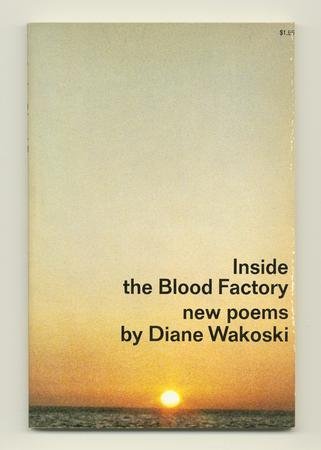
Inside the Blood Factory by Diane Wakoski (Doubleday, 1968)
I spent my teenage years in South Florida pouring over Sylvia Plath, Diane Wakoski, and Anne Sexton – dynamic, vibrant writers that intertwine personal mythology with confessional poetry. The women who taught me that I’m the only one who can tell my story. They compelled me to trust my instincts, to take chances. To lean into my experience as a woman instead of considering it a hinderance. They gave me the courage to put it all down on the page – and the will to make it sing.
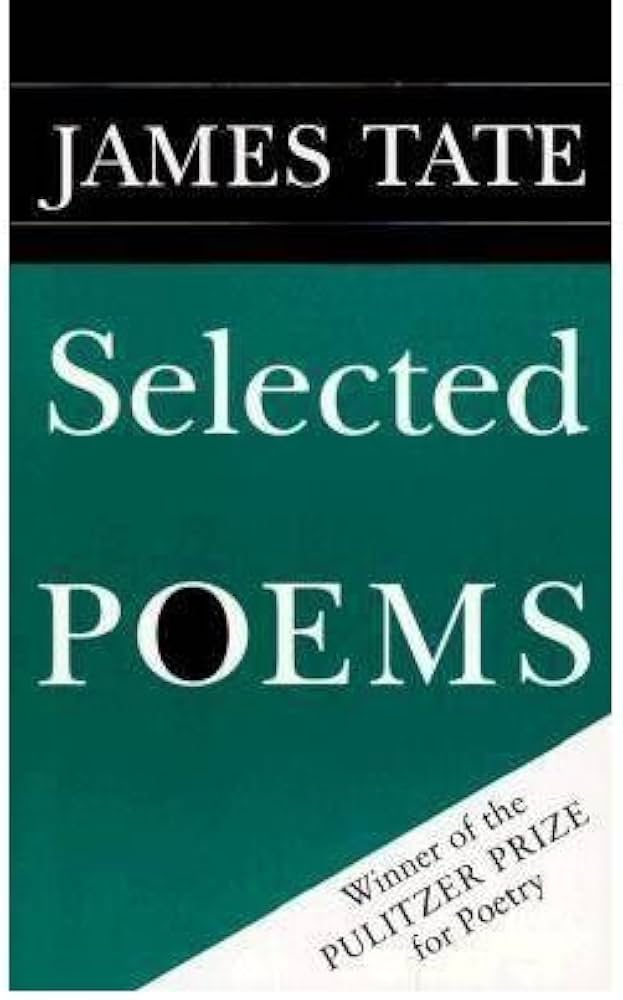
James Tate Selected Poems (Wesleyan University Press, 1991)
When I moved to New York as an undergrad, I dove into the beloved academic poets of the Northeast – John Ashbery, Frank O’Hara, Robert Creely, James Tate. There was a playfulness with form and a subversion of style that felt effortlessly cool. Poems that cut through the noise to broadcast urgency. Poems that move through the absurdities of the world. I swooned at the strength and queer beauty of Adrienne Rich and Audre Lorde, and found new obsessions in modern poets like Anne Carson and Nick Flynn – each of them mediums skilled at channeling the complexities of the human experience.
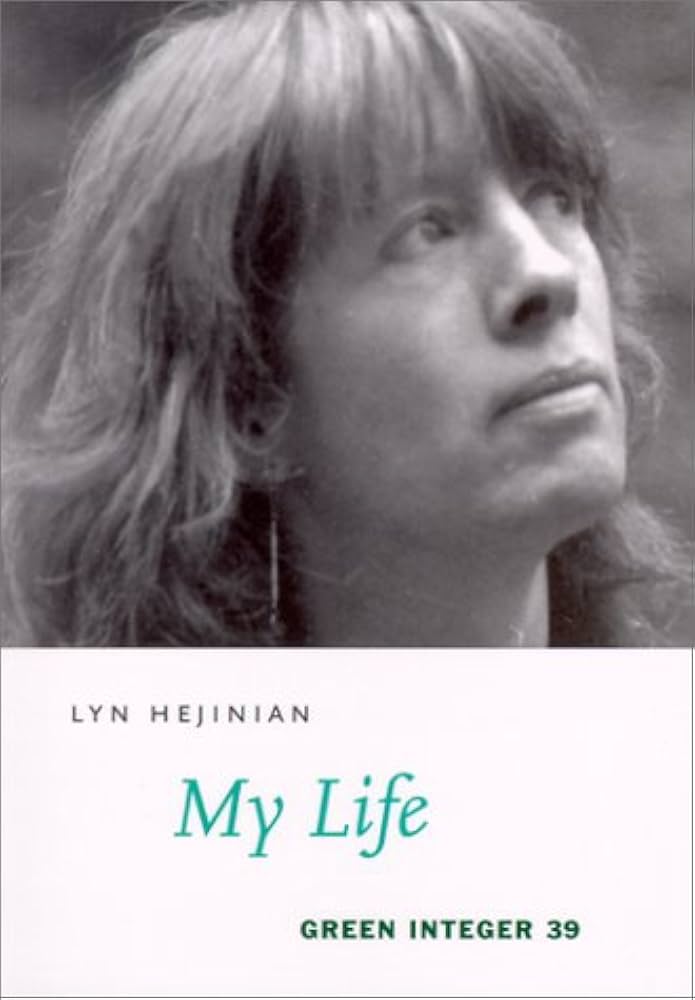
My Life by Lyn Hejinian (Green Integer, 2002)
I switched coasts to the California Bay Area for grad school and found myself thrown into a completely new realm of evocative language poets like Carol Snow, Lyn Hejinian, and Leslie Scalapino, Wild yet constrained – every word choice so precise and purposeful they could have been placed there with chef tweezers. Richard Siken and Tyehimba Jess released their dynamic debut collections and instantly became part of the curriculum. Instead of making it look easy, their poems highlighted just how much work and thought went into each piece. It was intimidating and aspirational. This is what great poetry could be.
This is also the time in my life where art and poetry converged in a more direct way. Poems written in images. Poems written in charts. Erasure poems. Hybrid poems paired with collage. Everything felt overwhelming, like the discovery of a new continent. It was in many ways a rekindling of my original teenage adoration. The idea of possibility.
Read, Write, Transform
These are just a handful of the poets that changed me during very specific timeframes. I’ve lived at least three lives since then. Probably more. The point being that the power of poetry is that it unites people across space, culture, and time – even to a former version of yourself. Poetry is gratitude.
You can read Sappho and understand that desire does not change. You can read an entire novel written in sonnets by Vikram Seth. Or find a new favorite poet on Instagram. You are the culmination of every writer you’ve ever loved. Poetry continually shapes us, that’s why it’s so important.
All of this to simply say: keep reading, keep writing, keep sharing your work. Keep honing your voice. Keep listening. Keep uplifting each other’s voice. Poetry is audacity.
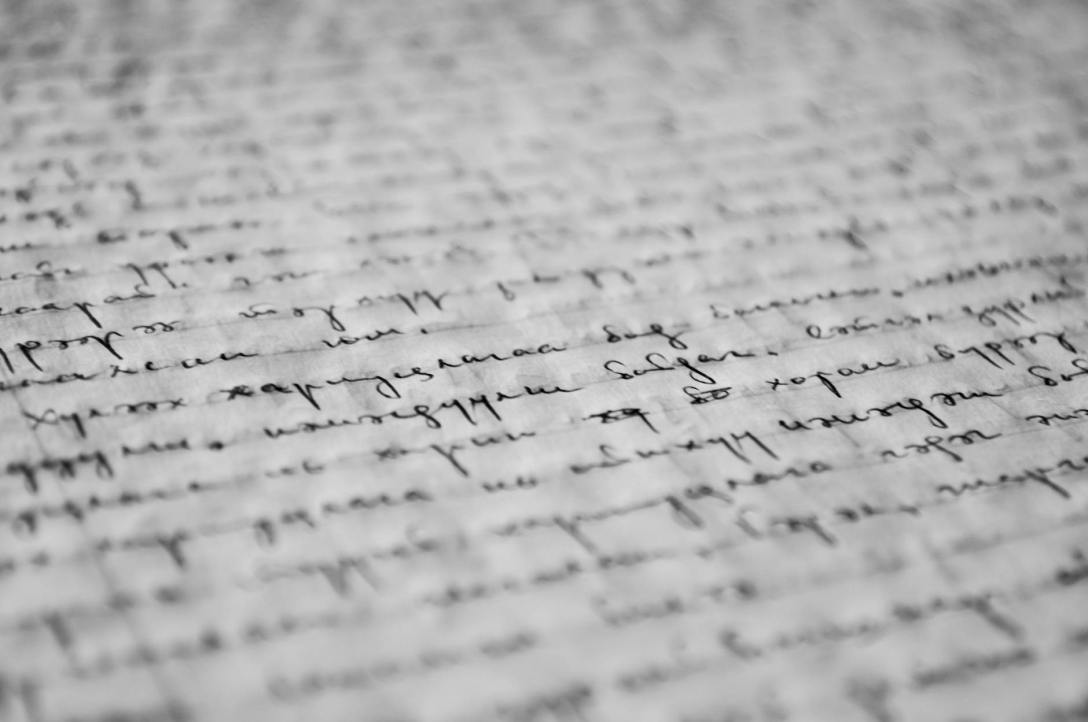
This poem was originally published in Cicatrix: A Journal of Experimentation in 2017. I wanted to play with the concepts common in erasure poems, exploring both form and formatting by creating space between the words that can be a placeholder for a breath as well as to leave room for both anticipation and surprise. The idea of ink disappearing also plays with the idea of memory – one of the most frequent themes in my work. I loved the idea of ink fading over time the same way memories fade over time, adding another layer of complexity when trying to relive a moment, a story, or a feeling.
This poem originally appeared in Switchback Journal (from the University of San Francisco) back in 2006. It’s part of a small series of poems I started forever ago about expressive gestures. Additional poems from this mini collection include Wink, Smile, and Leer. When I started the series, I was reading ‘The Seventy Prepositions’ by Carol Snow and enamored with the idea of taking a small gesture and diving into it from physical, emotional, and etymological perspective.
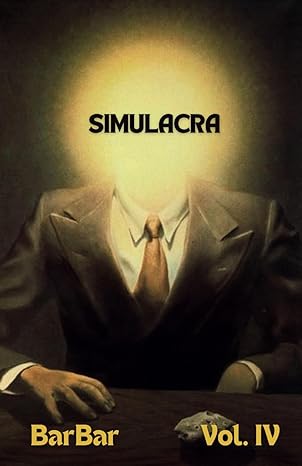
I’m delighted to announce that another one of my horror movie poems, ‘Carnival of Souls – Release’ has been published in Paper Dragon, Vol. 8. This is the second horror poem I created based on the movie, Carnival of Souls (1962). While both poems are part of a larger collection, I think it’s a bit amazing that CoS is the only movie where I liked two versions of a poem enough to keep both AND that they ended up being published by very different publishers only days apart. ‘Carnival of Souls – Muted’ appears in Simulacra: BarBar Vol. IV (which you can purchase on Amazon).
Both poems are very different from each other and inspired by different themes in the film – which I highly recommend if you’ve never seen it. Carnival of Souls isn’t exactly scary and by modern horror standards, many of the ideas and makeup choices may seem outdated — but the way the filmmaker explores what it feels like navigating the world as a woman (whether alive or dead), feels incredibly timely and relevant. Paper Dragon Vol. 8 is a horror-themed issue and I hope you enjoy reading all the exciting work in this spooky volume. Part of Paper Dragon’s platform is pairing written and visual works, and I was so excited to see my poem set alongside ‘This Limestone Doom’ by Brett Stout. Check out the whole issue and start off the new year with some deliciously creepy work.
I’m so excited to announce my poem, “Carnival of Souls – Muted” is featured in the newly released Simulacra: BarBar Vol. IV, edited by Cory Nolan. Now available on Amazon, this intriguing anthology promises to transport readers into a realm where reality cannot be trusted, and what you see isn’t always real. Per the editor:
“You are about to embark on a journey beyond the outer reaches, through liminal spaces, into the uncanny valley, where the familiar becomes foreign, the self fractures, and alienation, paranoia, and absurdity await. BarBar Vol. IV, our latest collection of poetry and prose, invites you to confront the void—an infinite regress of pastiche—where reality unravels, and simulation ascends. Here, hyperreality distorts perception, leaving only echoes of existence tangled in existential dread and cosmic horror.”
Featuring a thoughtfully curated selection of poetry and prose, this issue of BarBar is perfect for readers looking to go beyond the ordinary and explore the dark and mysterious corners of the mind.
My personal contribution is from an ongoing collection of poems that explore the themes, characters, and aesthetics of 20th century horror films. Additional poems from this series, including ‘The Mummy’ and ‘Dawn of the Dead’, have also been published. Check out my Publications page if you haven’t read them yet!
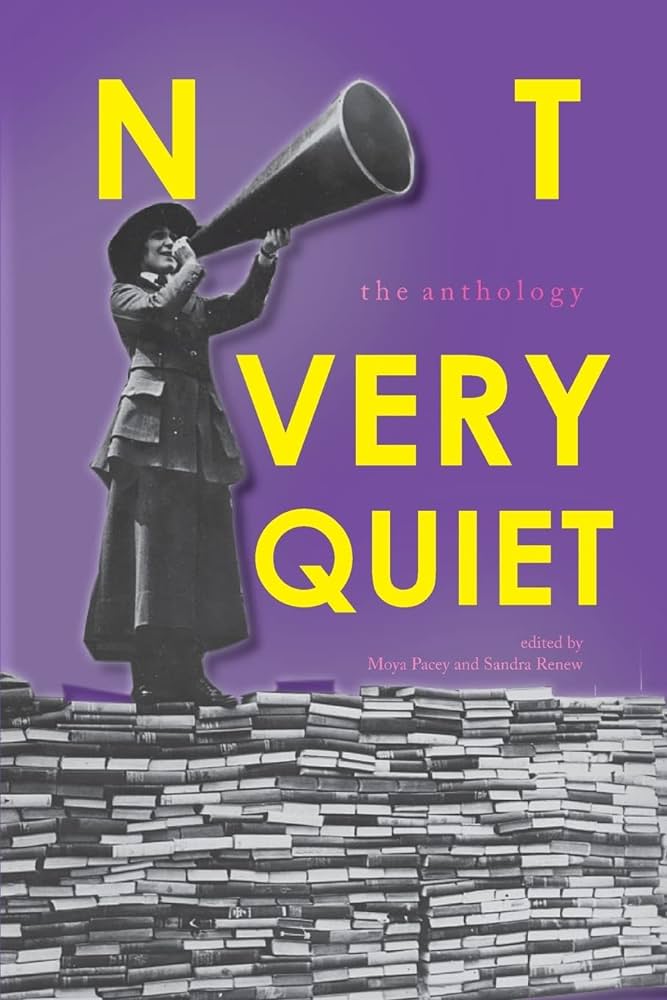
Check out my poem, Pandora’s Kitchen, along with all the other exceptional work from talented poets across the globe in Not Very Quiet: The Anthology, released by Recent Work Press in 2021. You can purchase the anthology directly from Recent Work Press and help support small, independent publishers.
The official anthology description: Over the last five years, from the #Me Too Movement to same-sex marriage, from devastating bush fires to the global pandemic, the online poetry journal Not Very Quiet has dedicated itself to publishing women’s voices from across the globe. Not Very Quiet: The anthology selects poetry that has given voice to the social conscience of the community, constructions of lesbian and queer, the challenges posed to the social construction of gender, as well as the complexities and possibilities of the human condition.


 Allison Goldstein